
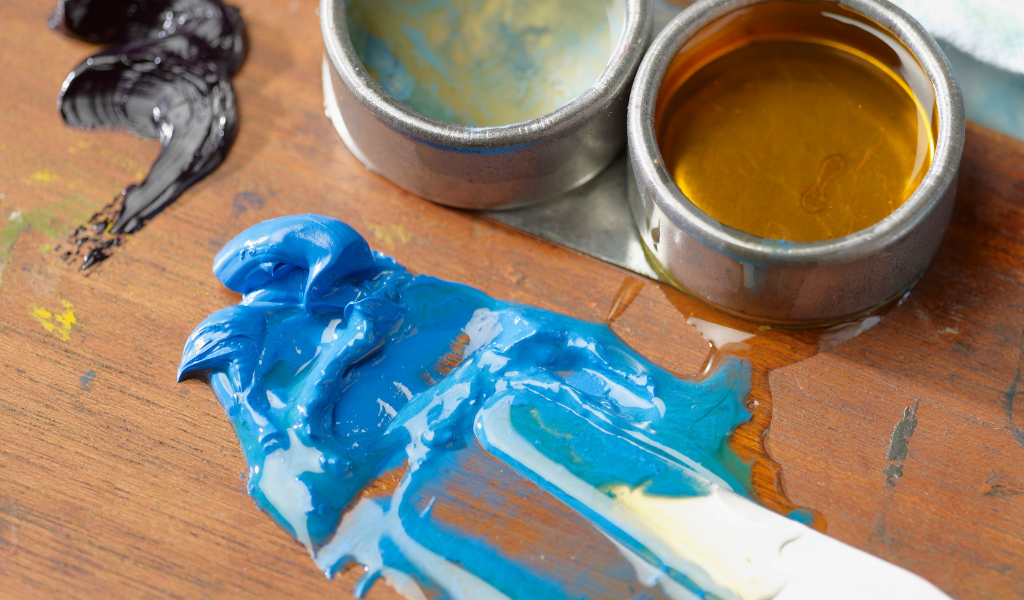
Oil is one of the main components of oil paint, but it is also used as a separate medium to adjust the paint’s properties during painting. Adding oil improves flow, increases transparency and gloss, and affects drying time. This makes oils one of the most traditional ways to modify how oil paint behaves.
Choosing an oil might seem straightforward at first, but even linseed oil comes in several different forms. Other drying oils, such as poppy seed oil, are also used in oil painting. Their properties, drying times and applications vary, so let’s take a closer look at when to choose each one.
What does adding oil do to oil paint?
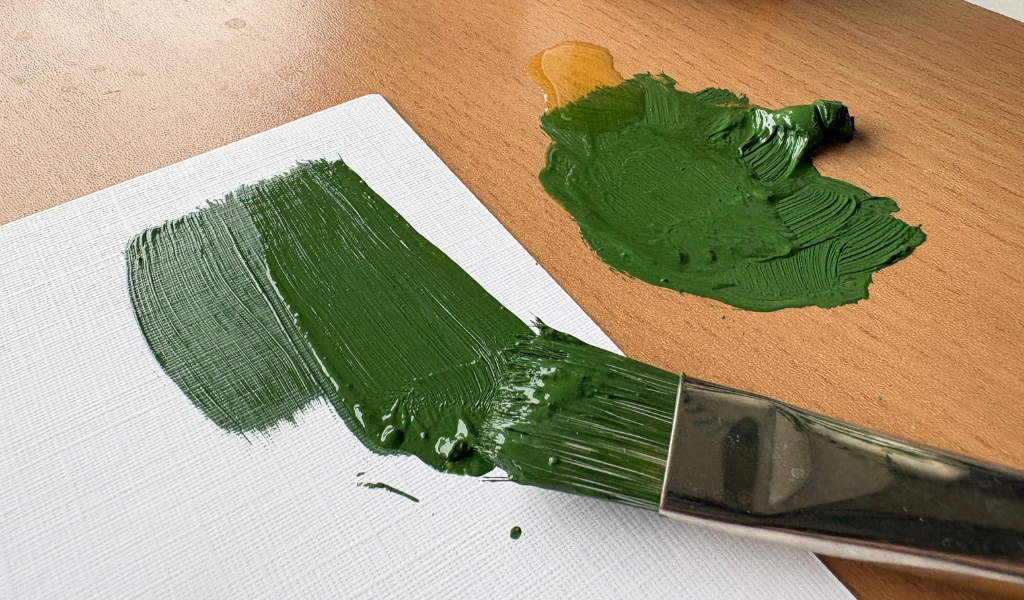
Oil paint already contains a drying oil as its binder, usually linseed oil, so there is no need to add anything to it before painting. Additional oil is used when you want to adjust the paint’s properties. It makes thick paint flow more easily and allows the brush to move more smoothly across the surface, while also increasing transparency and gloss. Oils are therefore useful for creating thin paint layers and glazes. However, they should be added sparingly, as adding oil reduces the proportion of pigment in the mixture. Most oils also extend the paint’s drying time, although specially formulated drying oils can speed it up.
Adding oil also increases the oil content of the paint layer, which needs to be considered when painting in layers. This is where the fat over lean principle applies: use less oil in the lower layers, then gradually increase the proportion as the painting progresses. Each successive layer should therefore contain more oil than the one beneath it. This allows the lower layers to dry before the oilier, slower-drying layers applied on top.
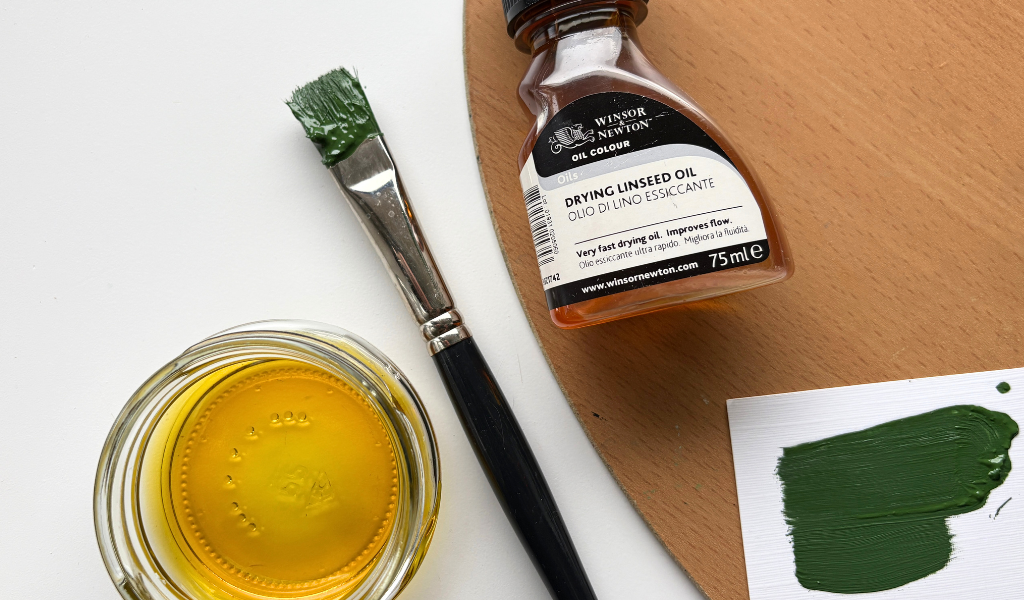
Linseed oil, the classic choice for oil painting
Linseed oil is the most widely used drying oil in oil painting and serves as the binder in many oil paints. It forms a strong, durable paint film as it dries, but may yellow somewhat over time.
Different forms of linseed oil are produced through different processing methods or formulated to alter their drying time and handling properties.
- Refined linseed oil is a versatile and widely used painting medium. It is pale and has a low viscosity, improving the flow, transparency and gloss of oil paint. Refined linseed oil dries relatively slowly, extending the paint’s working time. Choose refined linseed oil if you want a versatile oil for everyday painting and do not need to speed up drying significantly.
- Clarified linseed oil is a traditional oil made from roasted linseeds. It promotes drying and forms a strong, durable paint film. It improves flow, transparency and gloss. Its slightly amber colour makes it particularly suitable for darker colours. It can also be combined with turpentine or mineral spirits to make your own painting medium. Choose clarified linseed oil if you want a traditional linseed oil with good drying properties, mainly work with darker colours or want to mix your own painting medium.
- Cold-pressed linseed oil is extracted from linseeds without heating and undergoes less processing than refined linseed oil. It acts as a strong binder and dries slightly faster than refined linseed oil. Cold-pressed linseed oil is used both as a painting medium and as a binder for making oil paint. Choose cold-pressed linseed oil if you prefer a more traditional, less processed oil or want slightly faster drying than refined linseed oil provides.
- Drying linseed oil contains added drying agents and is the fastest-drying form of linseed oil. It improves flow, transparency and gloss, but unlike regular linseed oil, it helps the paint layer dry more quickly. It can also be combined with other oils to shorten their drying time. Choose drying linseed oil if you want the properties of linseed oil but would like to move on to the next paint layer sooner.
- Stand oil is linseed oil that has been polymerised through heating, making it much thicker and more viscous than regular linseed oil. It levels well and helps reduce visible brushmarks, allowing you to create smooth glazes and even, almost enamel-like paint surfaces. Stand oil dries slowly and, because of its thick consistency, is often used with a suitable solvent or as an ingredient in a painting medium. Choose stand oil if you want smooth glazes, soft transitions or a paint surface with minimal brushmarks.
Poppy seed oil, a paler alternative to linseed oil
Poppy seed oil is paler than linseed oil and less prone to yellowing, making it a popular choice for whites, blues and other light colours. Its drawbacks are slower drying and a weaker paint film compared with linseed oil. It is therefore better suited to the later layers of a painting than as the main binder in the lower layers.
- Poppy seed oil improves flow and increases gloss while preserving the colour of light paints better than linseed oil. Its slow drying also gives you more time to blend colours and work on soft transitions. It is particularly useful in light-coloured passages and final paint layers.
- Drying poppy seed oil combines the low yellowing tendency of poppy seed oil with faster drying. It is useful when you want to use poppy seed oil with light colours but would prefer to avoid its usually long drying time.
Can different oils be used in the same painting?
You do not have to limit yourself to a single oil throughout a painting. Different oils can be used according to the properties you need at each stage. For example, you might use a faster-drying linseed oil in the earlier layers, followed by a slower-drying, less yellowing poppy seed oil in the lighter passages of later layers.
When combining oils, however, you need to consider their drying rates. As a general principle, the lower layers should dry faster than those applied on top. Slower-drying oils are therefore best reserved for the later layers of a painting.
There is also usually no reason to add several different oils to the same paint mixture. It is much simpler to choose an oil for each stage according to the property you need.
Which oil should you choose?
Choose an oil according to the properties you want to give your paint and the result you want to achieve.
- For general use, refined linseed oil is a suitable choice, improving flow, transparency and gloss.
- For a more traditional, less processed oil, choose cold-pressed linseed oil, which dries slightly faster than refined linseed oil.
- For faster drying, choose drying linseed oil. When working with light colours, drying poppy seed oil can be an alternative.
- For darker colours and traditional painting mediums, clarified linseed oil promotes drying and is also suitable for mixing your own medium.
- For smooth glazes and minimal brushmarks, stand oil helps the paint level evenly.
- For whites and light colours, consider poppy seed oil, which yellows less than linseed oil and provides a longer working time.
You do not need to add all these oils to your painting supplies at once. One versatile oil is often enough to begin with. You can add another when a specific need arises, such as adjusting drying time, working time or the character of the paint surface.


